

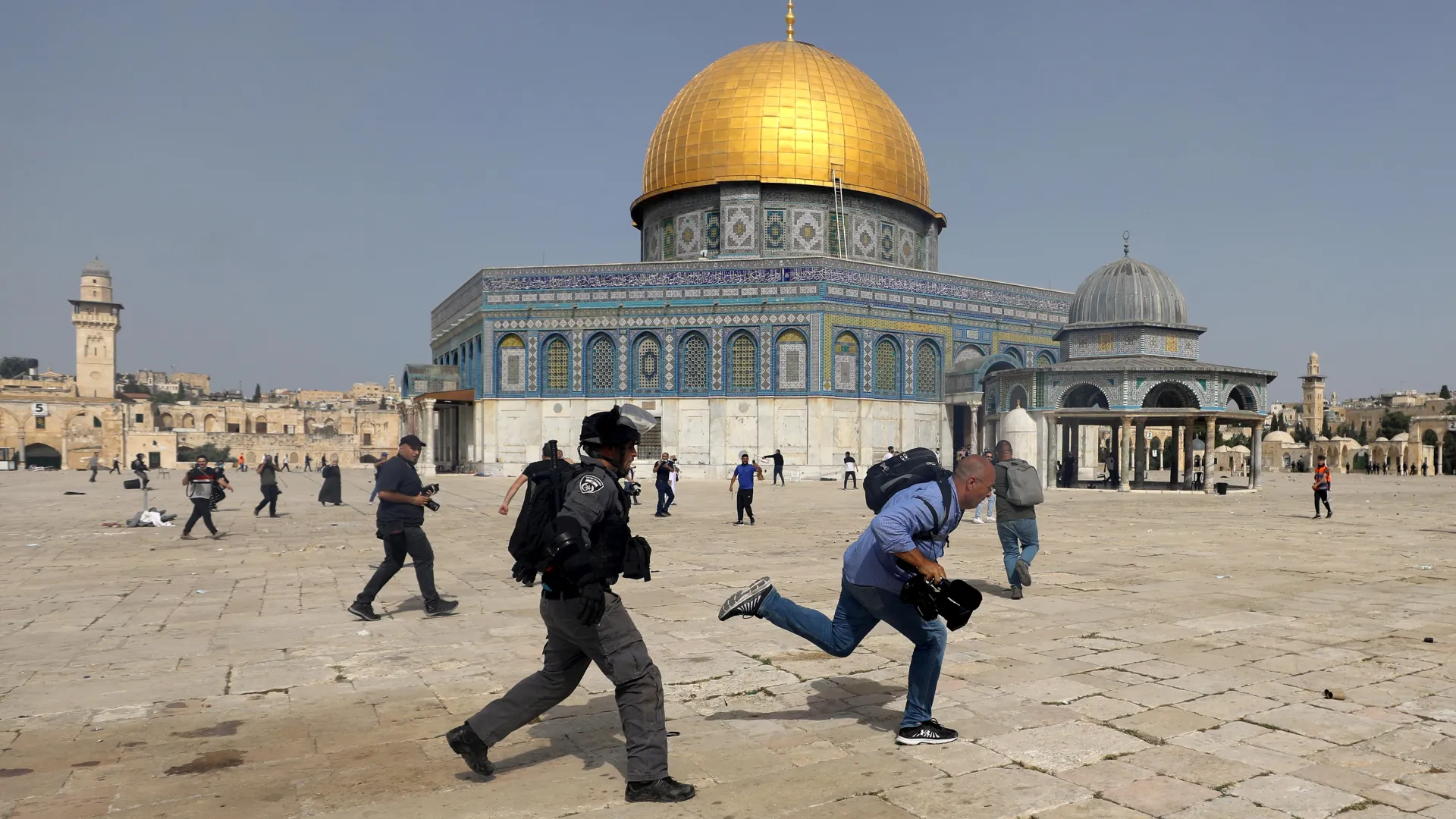
The Muslim World League (MWL) has strongly condemned the continued closure and restriction of access to Al-Aqsa Mosque (Al-Haram Al-Sharif) for Muslim worshippers during the holy month of Ramadan, describing the move as a serious violation of religious freedom and the sanctity of Islamic holy sites.
In a statement issued from Makkah, the MWL’s General Secretariat said the restrictions imposed by Israeli authorities at the compound in Jerusalem amount to an unacceptable encroachment on one of Islam’s most sacred places of worship.
His Excellency Sheikh Dr Mohammed bin Abdulkarim Al-Issa, Secretary-General of the Muslim World League and Chairman of the Organisation of Muslim Scholars, condemned the continued closure of the mosque and limitations placed on worshippers attempting to observe Ramadan prayers.
“The continued closure of Al-Aqsa Mosque to worshippers during the holy month of Ramadan represents an unacceptable violation of the sanctity of Islamic holy sites,” Al-Issa said in the statement.
He urged the international community to act decisively to uphold its legal and moral responsibilities and ensure the protection of religious sites in Jerusalem.
Al-Aqsa Mosque, located within the Old City of Jerusalem, is the third holiest site in Islam after the Grand Mosque in Makkah and the Prophet’s Mosque in Madinah.
The mosque compound, known to Muslims as Al-Haram Al-Sharif and to Jews as the Temple Mount, has long been a focal point of political and religious tension.
During Ramadan, the site normally receives hundreds of thousands of Muslim worshippers from Jerusalem, the occupied West Bank and other parts of the world who gather for nightly Taraweeh prayers and special observances, particularly during the last ten days of the holy month.
However, in recent years, access to the mosque has frequently been restricted amid heightened security tensions between Israeli forces and Palestinians.
Israeli authorities often cite security concerns when limiting entry, including age restrictions and permit requirements for Palestinians seeking to reach the compound from the West Bank.
Human rights organisations and international observers have repeatedly criticised such restrictions, arguing that they undermine the right to freedom of worship and disproportionately affect Muslim worshippers during key religious periods.
The Muslim World League said the continued restrictions during Ramadan are particularly troubling because the month holds deep spiritual significance for Muslims worldwide. Ramadan is marked by fasting, prayer, reflection and increased attendance at mosques.
The MWL statement stressed that the sanctity of religious sites must be respected regardless of political disputes, adding that violations of holy places risk escalating tensions in an already volatile region.
Al-Issa called for immediate steps to ensure that Muslims are able to access the mosque freely and safely during Ramadan and beyond.
“The international community must fulfil its obligations to stop these systematic violations against the sanctity of religious sites in Jerusalem,” he said.
Jerusalem’s holy sites have historically been governed by delicate arrangements involving religious authorities and political actors.
Under the long-standing status quo arrangement, the Islamic Waqf administers the Al-Aqsa compound while Israeli security forces control access to the site.
The issue has repeatedly drawn global attention whenever restrictions intensify, particularly during religious holidays when the number of worshippers significantly increases.
Several international bodies, including the United Nations and the Organisation of Islamic Cooperation, have previously expressed concern about access limitations to the mosque and the potential for such measures to inflame regional tensions.
For many Muslims around the world, Al-Aqsa holds deep religious and historical importance. Islamic tradition regards the mosque as the first qibla (direction of prayer) in early Islam and the site from which the Prophet Muhammad is believed to have ascended to heaven during the Isra and Mi’raj.
The Muslim World League reiterated that preserving the sanctity and accessibility of religious sites is essential to maintaining peace and mutual respect among faiths.
The organisation concluded its statement by urging world leaders and international institutions to take urgent action to safeguard the rights of worshippers and prevent further escalation around the holy compound.
